

Clean Production: The Common Aspiration of Malaysian Cement Factories
The main pollution in Malaysian cement plants includes air pollution, water pollution, and noise pollution. Air pollution is primarily caused by the emission of particulate matter, sulfur dioxide, nitrogen oxides, and carbon monoxide during the cement production process. Water pollution occurs due to the discharge of industrial wastewater containing suspended solids, heavy metals, and chemicals into nearby water bodies. Noise pollution is generated by the operation of heavy machinery and equipment used in the manufacturing process.

Sure, here is the English content regarding the selection principles of pneumatic conveying pumps:
---
**Selection Principles of Pneumatic Conveying Pumps**
1. **Material Characteristics**: Understand the properties of the material to be conveyed, such as particle size, density, moisture content, abrasiveness, and flowability. Different materials may require different types of pneumatic conveying systems.
2. **Conveying Distance and Capacity**: Determine the required conveying distance and volumetric throughput. Longer distances and higher capacities may necessitate more powerful or specialized pumps.
3. **System Pressure Requirements**: Assess the pressure requirements for the conveying system. This includes both the positive pressure needed to move the material and any negative pressure required for vacuum systems.
4. **Energy Efficiency**: Consider the energy consumption of the pump. More efficient pumps can lead to significant cost savings over time. Look for pumps with high efficiency ratings.
5. **Reliability and Maintenance**: Choose a pump known for its reliability and ease of maintenance. Frequent breakdowns and complicated maintenance routines can increase operational costs.
6. **Compatibility with Existing Systems**: Ensure that the new pump is compatible with existing components and infrastructure. This includes fitting into the current piping network and integrating with control systems.
7. **Noise Levels**: Evaluate the noise levels generated by the pump. High noise levels can be disruptive in work environments and may require additional soundproofing measures.
8. **Environmental Considerations**: Take into account any environmental regulations or standards that may impact the choice of pump, such as emissions limits or energy efficiency standards.
9. **Cost-Effectiveness**: Analyze the total cost of ownership, including initial purchase price, installation costs, operating expenses, and maintenance fees. The cheapest option may not always be the most cost-effective in the long run.
10. **Supplier Reputation and Support**: Select a reputable supplier who offers good customer support and after-sales service. A reliable supplier can provide valuable assistance with installation, troubleshooting, and maintenance.
---
These principles should guide you in selecting the appropriate pneumatic conveying pump for your specific application, ensuring optimal performance and efficiency.
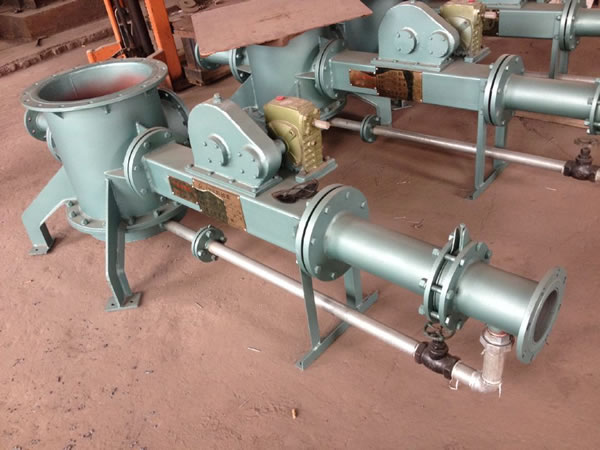
Pneumatic conveying pumps have solved several problems in cement plants. Here's how they address these issues:
1. **Material Handling Efficiency**: Pneumatic conveying pumps improve the efficiency of material handling by using air pressure to transport bulk materials like cement powder through pipelines. This method reduces the need for manual labor and mechanical conveyors, which can be prone to wear and tear.
2. **Dust Control**: By encapsulating the material within a closed system, pneumatic conveying minimizes dust emissions. This is crucial in cement plants where dust control is essential for worker safety and environmental compliance.
3. **Space Utilization**: These pumps allow for the vertical and horizontal transportation of materials, making them ideal for facilities with limited space. The compact design of the system helps in better utilization of plant layout.
4. **Energy Consumption**: Pneumatic conveying systems are generally more energy-efficient compared to traditional mechanical conveyors. They require less power to operate, leading to cost savings on energy bills.
5. **Maintenance and Durability**: With fewer moving parts and reduced contact between the conveying medium and the materials, pneumatic systems tend to have lower maintenance requirements and longer service life.
6. **Versatility**: Pneumatic conveying pumps can handle a wide range of materials, including those that are abrasive or have varying particle sizes, which is common in cement production.
7. **Process Integration**: These pumps can be easily integrated into existing production lines without major modifications, allowing for smoother transitions during upgrades or expansions.
8. **Safety Improvements**: By reducing the need for manual handling of heavy and potentially hazardous materials, pneumatic conveying enhances workplace safety.
In summary, pneumatic conveying pumps offer a cleaner, more efficient, and safer method of material handling in cement plants, addressing many of the challenges associated with traditional handling methods.
Pneumatic conveying pumps provide strong support for the environmental protection sector but there is still much room for optimization in their application. By continuously improving and developing pneumatic conveying pumps to achieve a higher degree of green environmental protection this not only contributes to environmental conservation but also promotes human civilization and development. At the same time we should recognize that environmental protection is a long-term and complex task that requires the participation and effort of everyone to jointly build a beautiful home