

Myanmar uses pneumatic conveying pumps to synchronize production with environmental protection
What is the main pollution in Myanmar cement plants?

Sure, here is the information you requested:
Advantages of Pneumatic Conveying Pumps:
1. **Versatility**: Pneumatic conveying pumps can handle a wide range of materials, including powders, granules, and even pieces of material. They are suitable for various industries, such as food processing, pharmaceuticals, chemicals, and construction.
2. **Efficiency**: These pumps can transport materials over long distances with minimal energy consumption. The use of air as the conveying medium reduces the risk of contamination and eliminates the need for mechanical moving parts in the conveying line.
3. **Gentle Handling**: Pneumatic systems provide gentle handling of fragile or sensitive materials, reducing the risk of damage or degradation during transportation. This is particularly beneficial for products like powders, which can be easily damaged by more abrasive methods.
4. **Dust-Free Operation**: By using enclosed pipelines, pneumatic conveying systems minimize dust emissions, improving workplace safety and environmental compliance. This is especially important in industries dealing with hazardous or toxic materials.
5. **Flexibility in System Design**: Pneumatic conveying systems can be easily adapted to fit the specific needs of a facility. The layout can be customized with multiple inlets and outlets, bends, and changes in elevation, making it versatile for different plant configurations.
6. **Reduced Maintenance**: With fewer mechanical components compared to other types of conveying systems, pneumatic pumps generally require less maintenance. There are no moving parts in the conveying line itself, which means less wear and tear and lower operational costs.
7. **Improved Productivity**: The automated nature of pneumatic conveying systems allows for continuous operation, increasing productivity and efficiency in material handling processes. This can lead to significant time and cost savings.
8. **Safety**: Pneumatic systems reduce the need for manual handling of materials, thereby minimizing the risk of injury to workers. Additionally, the absence of mechanical moving parts in the conveying line reduces the potential for accidents and equipment failure.
9. **Scalability**: Pneumatic conveying systems can be scaled up or down depending on the volume of material being handled. This makes them suitable for both small-scale operations and large industrial applications.
10. **Cost-Effectiveness**: While the initial investment in a pneumatic conveying system may be higher compared to some other methods, the long-term benefits in terms of reduced maintenance, improved efficiency, and lower operational costs make it a cost-effective solution overall.
These advantages make pneumatic conveying pumps a popular choice for many industries looking for efficient, reliable, and flexible material handling solutions.
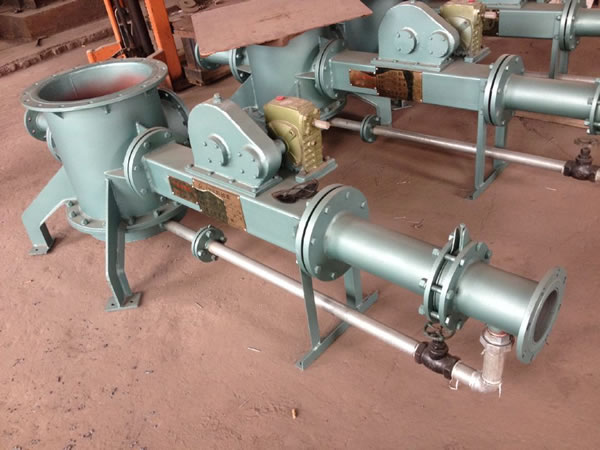
针对水泥厂的输送问题,气力输送泵提供了一种高效、可靠的解决方案。以下是关于气力输送泵在水泥厂应用的一些关键点:
1. 气力输送泵的工作原理:通过压缩空气将物料从一个地方输送到另一个地方。这种输送方式具有输送速度快、输送距离远、输送过程中物料不易受潮、不受污染等特点。
2. 气力输送泵的优点:与传统的机械输送方式相比,气力输送泵具有以下优点:
- 节省能源:气力输送泵的能耗较低,可以降低生产成本。
- 减少维护成本:由于气力输送泵没有机械运动部件,因此维护成本较低。
- 提高生产效率:气力输送泵可以实现连续、稳定的物料输送,提高生产效率。
- 环保:气力输送泵在输送过程中不会产生粉尘和噪音,有利于环境保护。
3. 气力输送泵在水泥厂的应用:气力输送泵广泛应用于水泥生产线的各个环节,如原料输送、熟料输送、水泥输送等。通过气力输送泵,可以实现物料的快速、准确输送,提高生产效率。
4. 选择气力输送泵的注意事项:在选择气力输送泵时,需要考虑以下因素:
- 输送距离:根据实际需求选择合适的输送距离。
- 输送能力:根据生产规模选择合适的输送能力。
- 物料特性:考虑物料的粒度、湿度等因素,选择适合的气力输送泵型号。
- 环境条件:考虑现场的温度、湿度等环境条件,选择适应环境的气力输送泵。
总之,气力输送泵作为一种高效、可靠的输送设备,在水泥厂的应用具有很大的优势。通过合理选择和使用气力输送泵,可以提高生产效率,降低生产成本,实现环保生产。
Through the analysis of the advantages and disadvantages of pneumatic conveying pumps as well as their environmental impact, we can conclude that pneumatic conveying pumps are valuable environmental protection equipment. However, their application cannot solve all environmental issues, and efforts must be made in other areas as well. At the same time, it is important to focus on developing new environmentally friendly products, managing waste from equipment, etc., to ensure a win-win situation for both the equipment and the environment. Only by doing so can we truly achieve the goal of environmental protection.